
Short answer: Download the free alphabet flash cards below as PDFs: uppercase, lowercase, upper and lower case together, picture cards, letter sounds and NATO phonetic alphabet cards. Each set comes 8 cards per page (3.75 by 2.5 inches, for cutting) or one card per page for teaching a group. Print on cardstock at 100% scale. No sign-up.
Free, no sign-up. US Letter paper. Print at 100% (Actual size) so the cards come out 3.75 × 2.5 in.
-
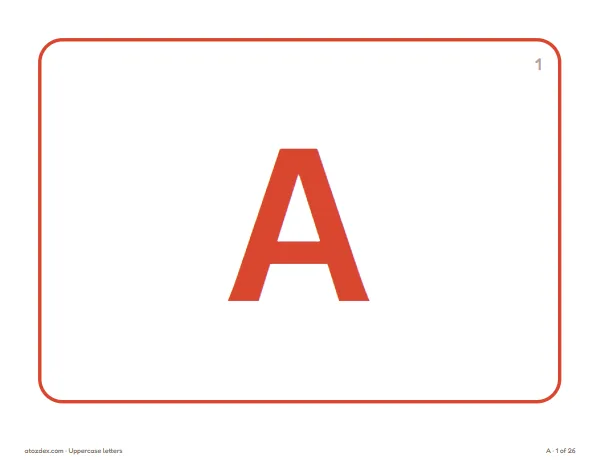
-
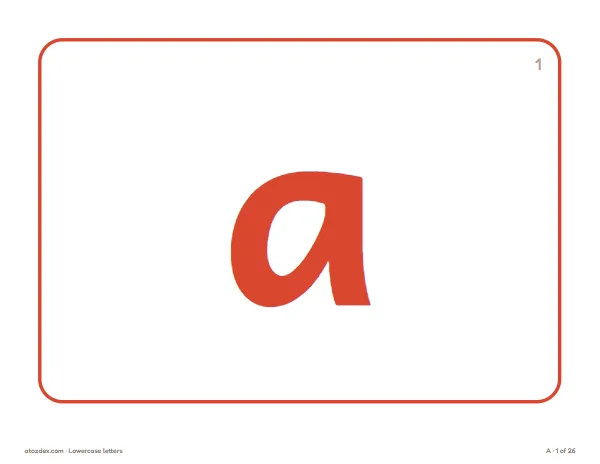
Lowercase letters
A big small letter on each card, a to z, in the a and g shapes kids learn to write.
See the 8-per-page sheet -
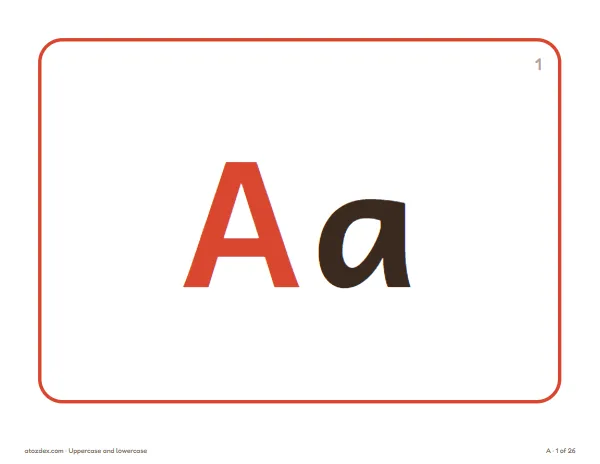
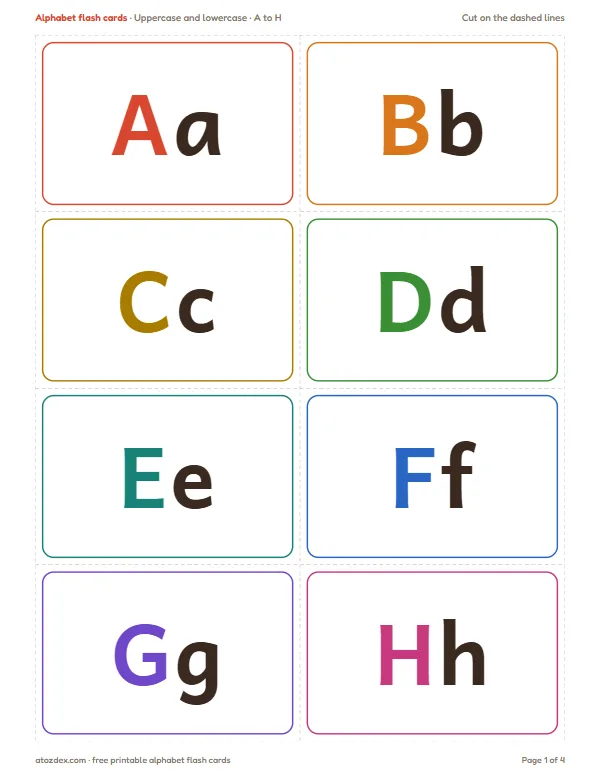
Uppercase and lowercase
Both forms side by side (Aa), for matching capitals to small letters.
See the 8-per-page sheet -
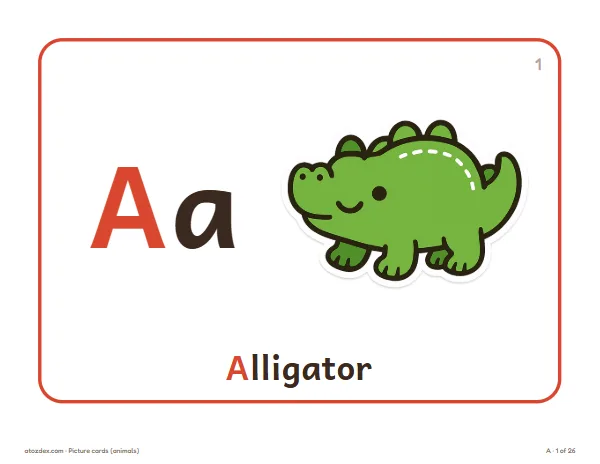
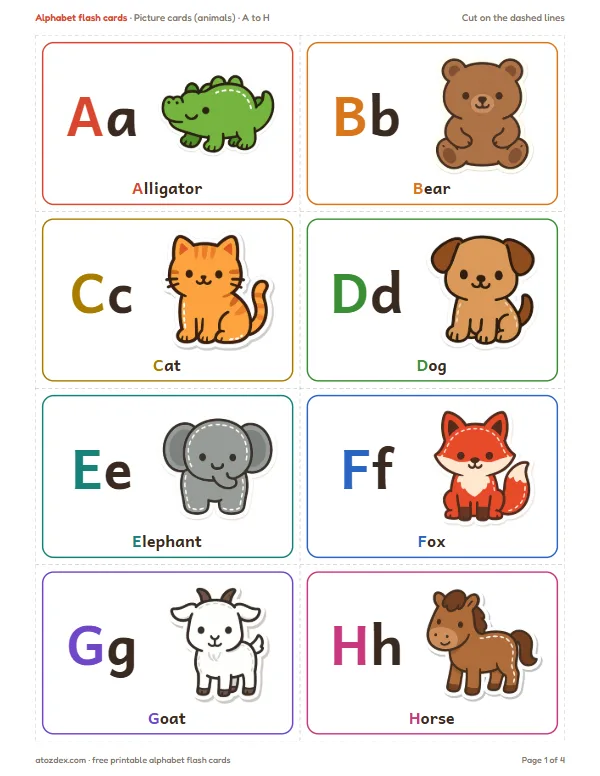
Picture cards (animals)
Letter, animal picture and word: alligator, bear, cat and on to zebra.
See the 8-per-page sheet -
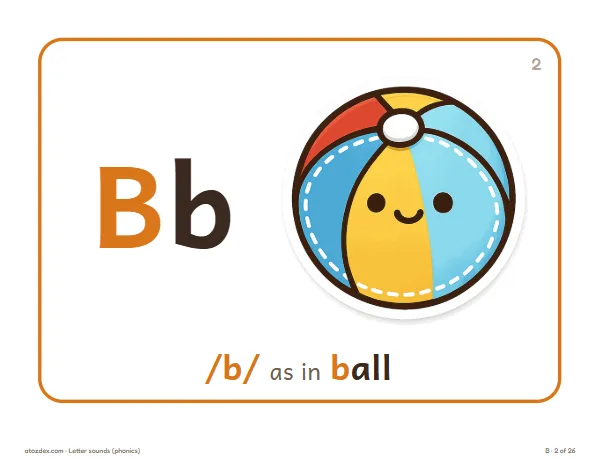
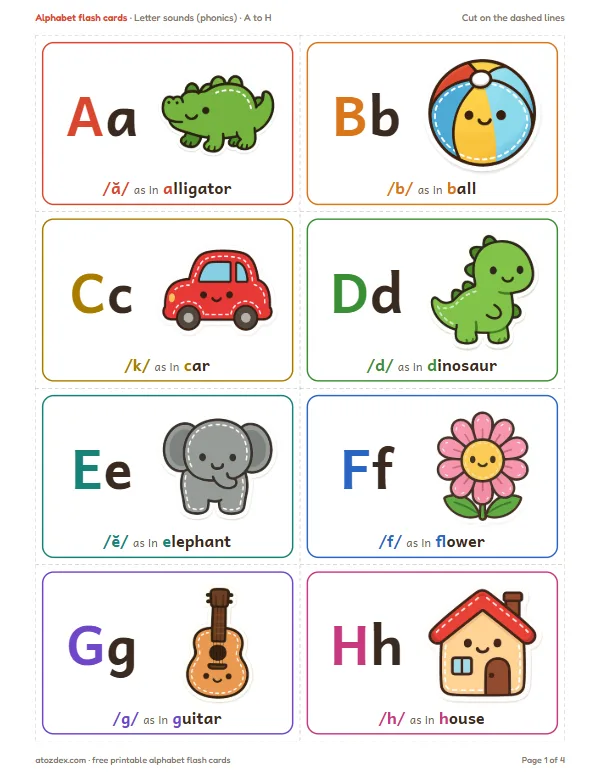
Letter sounds (phonics)
Each letter with its sound and a picture word, like /b/ as in ball. Short vowels.
See the 8-per-page sheet -
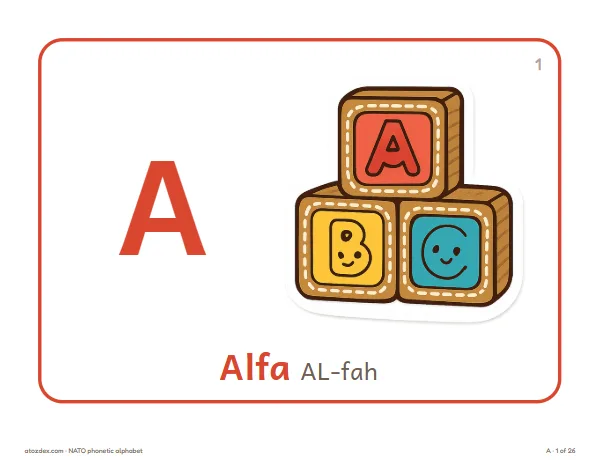
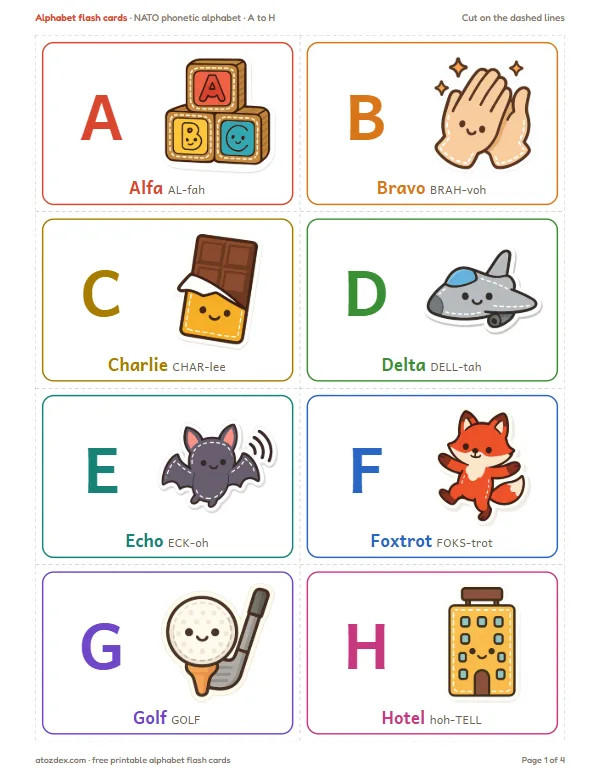
NATO phonetic alphabet
Alfa, Bravo, Charlie to Zulu, with how to say each code word.
See the 8-per-page sheet
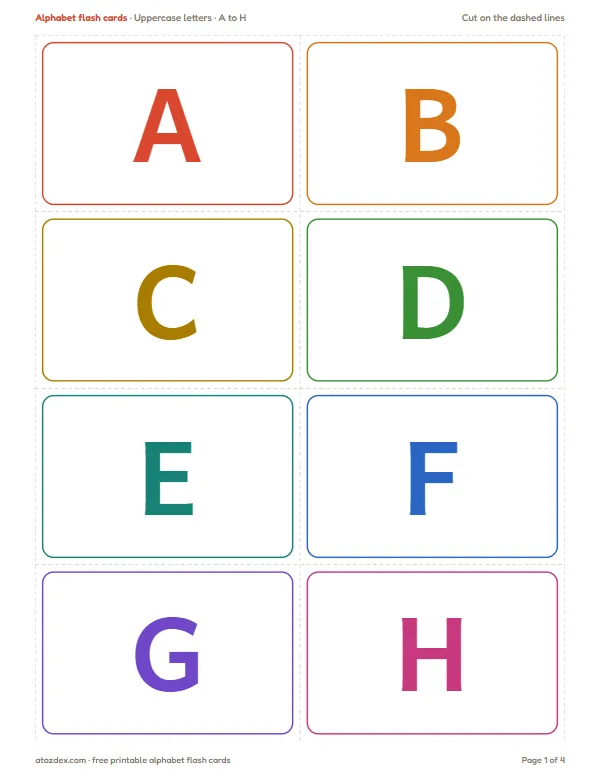
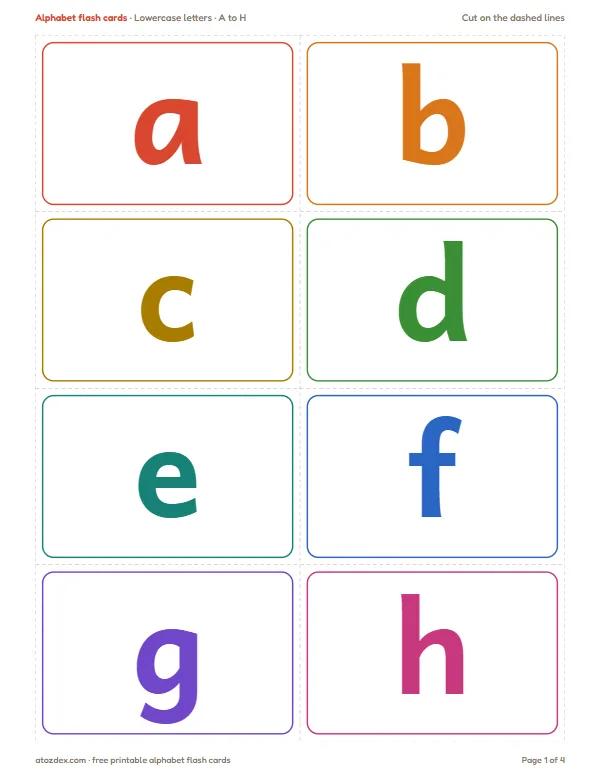
Pick the set that matches what the child is learning now. A toddler starts with pictures, a preschooler with capital letters and a kindergartner with lowercase letters and their sounds. The table below sorts the sets by age, followed by printing tips and seven games that make flash cards more than a drill.
This article contains Amazon affiliate links. Atozdex earns a commission on qualifying purchases. See our affiliate disclosure.
Which alphabet flash cards should you print?
Print the set for the skill the child is working on, not the whole stack. Ages are typical ranges; a child who already names every capital is ready for lowercase whatever their age.
| Set and age | Why it fits |
|---|---|
| Picture cards Ages 2 to 3, first exposure | The animal gives a toddler something to name before the letter means anything. |
| Uppercase Ages 3 to 4, letter names | Capitals have simple, distinct shapes. Most children name them first. |
| Upper + lower Ages 4 to 5, matching | Seeing A and a together links the two forms of each letter. |
| Lowercase Ages 4 to 6, reading | Most of the letters in a book are lowercase. |
| Letter sounds Ages 4 to 6, phonics | Pairs each letter with its most common sound, like /m/ in moon. |
| NATO phonetic Teens and adults | Spelling names and codes over the phone or radio: Alfa, Bravo, Charlie. |
By the end of kindergarten, children are expected to recognize and name all 26 uppercase and lowercase letters and to know the main sound of each consonant. The Head Start framework sets a lower bar for five-year-olds entering school: about 18 uppercase and 15 lowercase letters.
How to print, cut and laminate alphabet flash cards
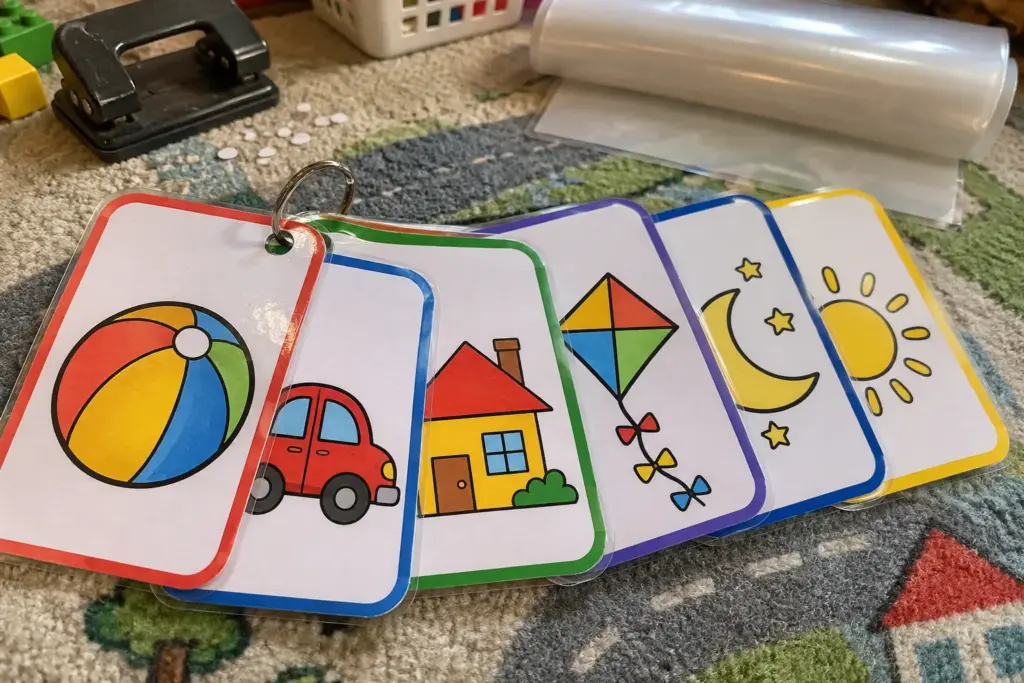
Cardstock and a laminator turn a 4-page PDF into cards that survive a toddler. Plain paper works for a quick game, but the cards bend and show through.
Should you teach uppercase or lowercase letters first?
Start with uppercase and the letters in the child’s name, then add lowercase within a few weeks. Most children learn to name capitals first because the shapes are simpler and harder to confuse. Children also pick up the letters of their own name, especially the first one, before the rest.
Research has not settled whether capitals first works better than teaching both forms together. What is clear is that lowercase is what children read: almost every letter in a picture book is lowercase. Lowercase letters that look like their capital (c and C, o and O, s and S) come easily. The ones that don’t (a, b, d, g, q, r) need the most practice.
7 games to play with alphabet flash cards
Games keep a session short and active. Use five to eight cards at a time, mixing known letters with two or three new ones so the child gets most answers right.
Phonetic alphabet flash cards: phonics or NATO?
“Phonetic alphabet” means two different things, and this page has a set for each. For a child learning to read, it means letter sounds: the letter-sound cards show each letter with its most common sound and a picture word, like /b/ as in ball. Vowels use the short sound (/ă/ as in alligator), and X uses /ks/ as in fox, since few English words start with that sound.
For adults it usually means the NATO phonetic alphabet, the code words pilots, the military and call centers use to spell over a radio or phone. The NATO cards show each letter, its code word and how to say it. Alfa and Juliett are spelled that way on purpose, so speakers of other languages pronounce them correctly. For a one-page reference, see the NATO phonetic alphabet chart.
Tips for using alphabet flash cards
Short, frequent sessions teach more than long ones. Five minutes a day beats half an hour on Saturday.
Once the child names most letters, move on to writing them. The alphabet tracing worksheets cover uppercase and lowercase A to Z, and the alphabet chart makes a wall reference that matches these cards.
FAQ
Yes. All 13 PDFs are free to download and print for home or classroom use, with no email or account needed.
The cut-out cards are 3.75 by 2.5 inches, eight to a US Letter page. The full-page version prints one card per landscape page, about 10 by 7 inches.
Picture cards work from about age 2, as a naming game. Letter cards fit ages 3 to 5, when most children learn letter names and sounds.
Start with uppercase for a preschooler and add lowercase soon after, since books are mostly lowercase. The upper and lower case set shows both forms on one card for matching.
For young children they are letter-sound cards that pair each letter with its sound, like /b/ as in ball. For adults they are NATO phonetic alphabet cards with code words from Alfa to Zulu.
Select Actual size or 100% in the print dialog. Fit to page shrinks the cards and the cut lines no longer match.
White cardstock between 65 and 110 lb is stiff enough to handle and works in most home printers. Laminate the cards if toddlers will use them.
Use five to eight cards per session, with two or three new letters mixed into ones the child already knows.
Sources
- California Department of Education. Common Core RF.K.1: Print concepts (recognize and name all upper- and lowercase letters)
- ERIC. Easy as AcHGzrjq: The Quick Letter Name Knowledge Assessment
- Purdue University College of Education. The ABCs of learning the ABCs
- The Ohio State University, Crane Center for Early Childhood Research. Alphabet learning and instruction
- Reading Rockets. Alphabet knowledge
- Reading Rockets (Shanahan on Literacy). Letter names or sounds first?
- FAA. Aeronautical Information Manual, chapter 4 section 2 (phonetic alphabet)
- SKYbrary. ICAO phonetic alphabet